
Pu’er, Baoshan, Dehong: three terroirs of Yunnan coffee
Pu’er, Baoshan and Dehong are three major terroirs of Yunnan coffee. Discover how they differ in climate, altitude, cultivation and cup profile.
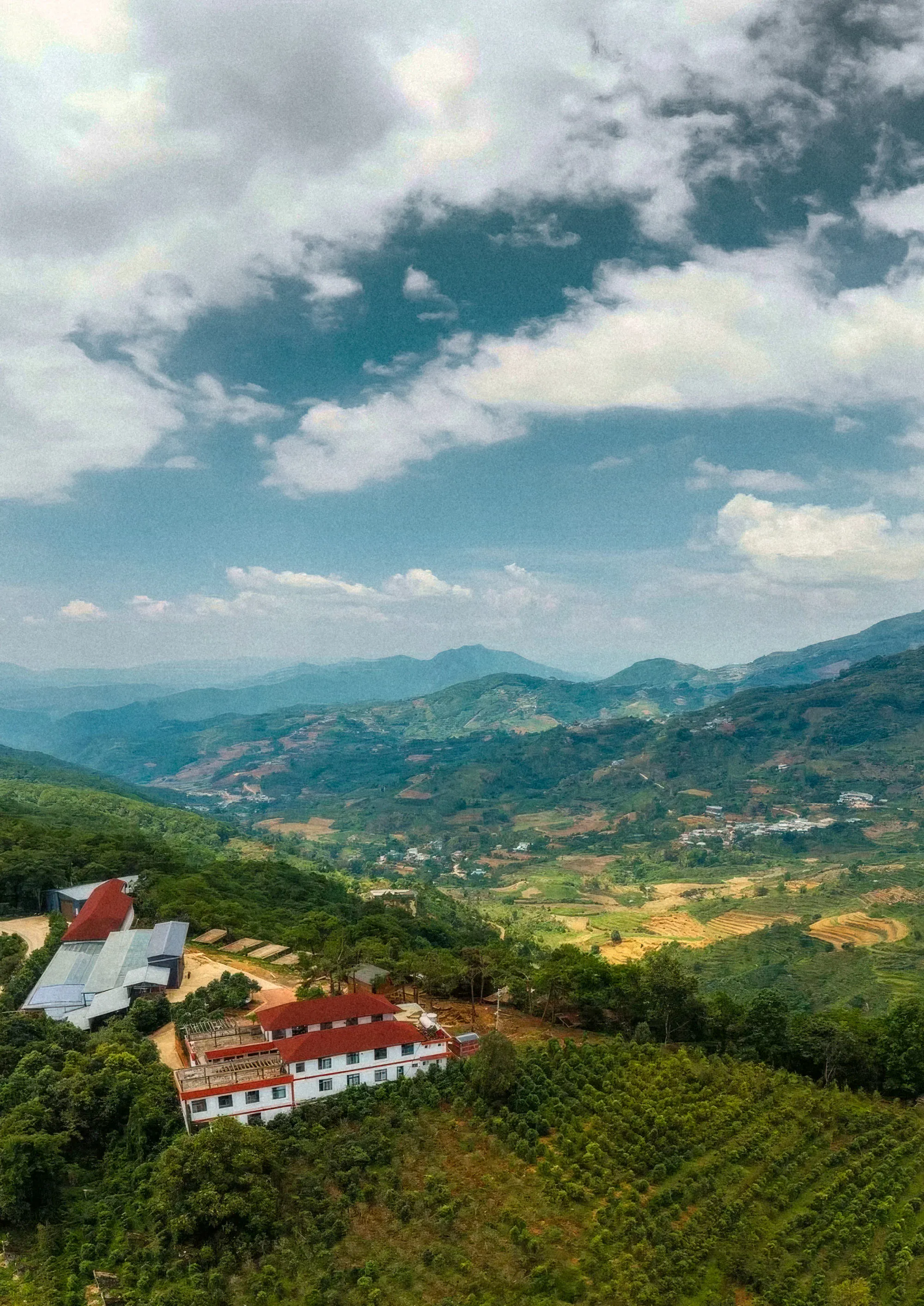
Talking about Yunnan coffee as a single thing is convenient, but reductive. The province is vast, mountainous and threaded with microclimates. Between a plantation in Pu’er, a plot in Baoshan and a farm in Dehong, growing conditions have almost nothing in common.
One Yunnan, several coffees
Altitude, aspect, soil, rainfall, temperature and variety all shape how cherries ripen. Add to that the grower’s decisions: shade, fertilisation, harvest, fermentation, drying.
Three areas illustrate this diversity particularly well: Pu’er, Baoshan and Dehong. All three lie in south-western China, and yet they do not produce the same coffee.
One caveat from the outset: a terroir never determines a coffee’s taste on its own. It creates a potential. The final result also depends on the variety, the processing and the roast.
Pu’er: the heart of Chinese production
Pu’er is now Yunnan’s largest coffee region, often described as China’s coffee capital. The city and its surroundings concentrate a large share of production, along with much of the trading and processing infrastructure.
The region sits in a subtropical mountain zone, at a latitude close to that of some major Latin American producing regions. Plantations occupy rolling relief and valleys at varying altitudes. The climate alternates between a rainy season and a dry season — conditions that favour flowering, cherry development and drying.
Catimor is widespread here. This group of cultivars offers attractive yields and good resistance to coffee leaf rust: in a region where production must be substantial, those agronomic qualities matter.
In the cup, Pu’er coffees are often described as balanced and approachable. You will find notes of cocoa, caramel, nuts, soft citrus or ripe fruit. The body is generally round, the acidity moderate, the finish clean when processing is well handled.
That description is deliberately general. A washed Catimor will not give the same impression as a natural Catimor or a lot from an experimental plot.
Pu’er is also where the move towards specialty is most visible. Washing stations separate lots more carefully, trial new fermentations and invest in optical sorting. Some estates now work with Bourbon, Pacamara or Typica. Pu’er is therefore both Yunnan’s agricultural powerhouse and its laboratory.
Baoshan: the elegance of high valleys
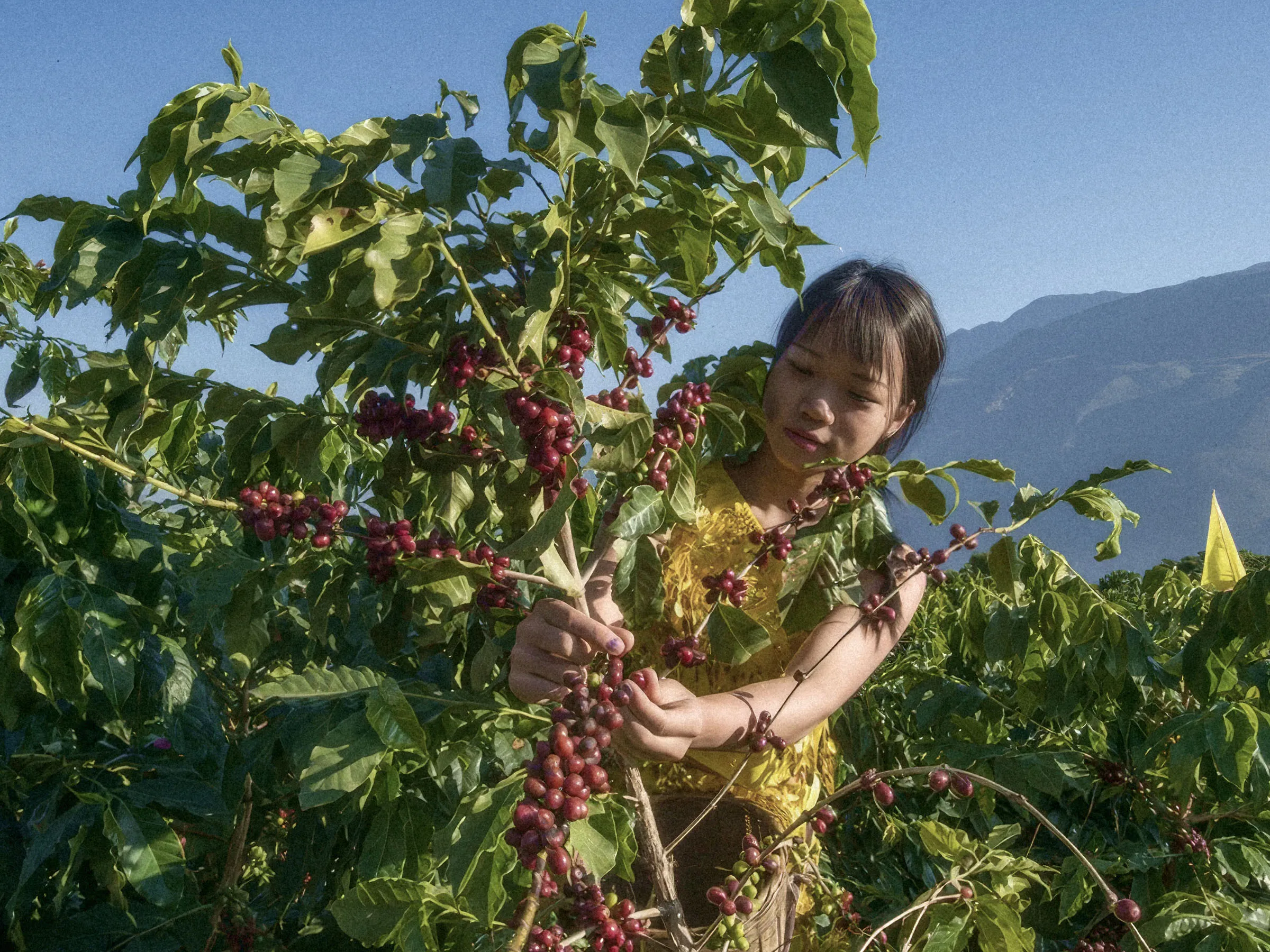
Baoshan lies in western Yunnan, near the Gaoligong mountains and the Nu river. Coffee growing there is long-established, linked in particular to the introduction of South-East Asian plants in the 1950s.
The land is marked by deep valleys, steep relief and wide differences in altitude. Some areas enjoy a drier, sunnier climate, particularly in the Nu river gorges. Other plots, higher up, benefit from cooler temperatures and slower ripening.
These conditions favour more aromatic coffees, with cleaner acidity and finer texture. Profiles associated with Baoshan often evoke citrus, honey, flowers, stone fruit and a delicate cocoa. Some coffees show a very clean mouthfeel, with a bright, elegant finish.
Baoshan is also known for Typica and Bourbon, two historically important varietal groups. Less productive and more disease-prone than Catimor, they can offer remarkable quality potential in the right conditions.
The region has a character of its own: a mountain coffee, often more delicate, where aromatic precision takes precedence over power. A well-brewed Baoshan coffee gives an impression of clarity and freshness, particularly through gentle methods — V60, pour-over, Chemex.
Baoshan is not, however, an origin of only light, floral coffees. Natural and honey processing bring body, fruit and sweetness. As always, the terroir speaks through the grower’s choices.
Dehong: depth and character
Dehong sits at the far west of Yunnan, close to the Burmese border. The region is one of the historic growing areas: Arabica is said to have been introduced there as early as 1914 from the neighbouring country.
The climate is generally warmer and more humid than in Baoshan’s mountain zones. Plantations occupy a range of altitudes, but the region is often associated with warmer conditions and less gradual ripening.
These characteristics yield coffees with more body, softer acidity and a profile dominated by cocoa, toasted cereals, nuts and spice. Some Dehong coffees give a round, structured cup, particularly suited to espresso or to blends.
Catimor and Typica are both grown here. Variety, altitude and processing nonetheless alter the final profile considerably: a natural Dehong can develop fruity, fermented notes, while a washed lot will be cleaner, more restrained, more chocolatey.
Dehong also matters for research and genetic conservation. The region hosts a significant collection of coffee plant material, which makes it an important territory for studying varieties and their adaptation.
Its potential rests less on spectacular acidity than on depth, texture and balance. It is a generous terroir, easy to understand, and far from lacking in character.
Three terroirs, three expressions
| Terroir | General environment | Common varieties | Frequently associated profile |
|---|---|---|---|
| Pu’er | Subtropical mountain zone, vast production basin | Catimor, Typica, Bourbon, Pacamara | Cocoa, caramel, soft citrus, ripe fruit |
| Baoshan | High valleys, Gaoligong mountains, marked temperature swings | Typica, Bourbon, Catimor | Honey, citrus, flowers, stone fruit, clean finish |
| Dehong | Warmer, more humid region near Burma | Catimor, Typica | Cocoa, nuts, spice, round body and moderate acidity |
This table offers landmarks, not rules. Two coffees from the same region can be very different. A grower who picks only ripe cherries and controls fermentation will get a very expressive cup; conversely, an uneven harvest or rushed drying dulls aromatic clarity.
The terroir acts as a foundation. The grower reveals it — or hides it.
Why processing matters
Post-harvest processing plays a particularly important role in Yunnan.
In a washed coffee, the pulp and most of the mucilage are removed before drying. The cup is often cleaner, brighter, more legible.
Natural processing dries the whole cherry. It brings more body, sweetness and fruit, but demands precise control to avoid unwanted fermentation.
Honey sits between the two: part of the mucilage stays on the bean during drying, reinforcing texture and sweetness while keeping a degree of clarity.
Across all three terroirs, growers are also experimenting with controlled fermentation, sometimes with selected yeasts or longer durations. These methods do not replace cherry quality, but they accentuate certain characteristics.
A washed Pu’er will seem very clean and balanced; the same coffee as a natural will be fruitier and denser. A Baoshan Bourbon in honey will heighten its honey and yellow fruit notes. A natural Dehong Catimor will gain sweetness and depth.
How to taste them
To compare these terroirs, keep as many variables constant as you can: same roast, same recipe, same temperature, same method.
A comparative tasting can start with a simple filter recipe:
- 15 grams of coffee for 250 grams of water
- a medium grind
- a temperature of 92 to 94 °C
- a total brew time of 2 min 30 to 3 min 30
Then observe the dry fragrance, the aroma after brewing, the acidity, the sweetness, the body, the length and the overall balance.
Pu’er will give an impression of comfort and roundness. Baoshan will stand out for freshness and finesse. Dehong will show more depth and texture.
But the best coffee is not necessarily the one with the brightest acidity or the most exotic profile. It depends on the moment, the brew and your own preferences.
A map still being drawn
Yunnan already has a substantial agricultural history, but its coffee identity is still taking shape. Pu’er, Baoshan and Dehong show that there is no single taste of Chinese coffee.
Pu’er stands for scale and innovation. Baoshan embodies mountain, altitude and aromatic precision. Dehong brings a warmer, deeper, more structured expression.
These three terroirs are not in competition: together they draw a complementary map. As growers improve sorting, processing and lot separation, their differences become easier to perceive.
That is what makes this origin so compelling: it is not settled. It is still being discovered, harvest after harvest.
Read more
- Yunnan coffee: a story that began in 1892
- Catimor, Yellow Bourbon, Pacamara: three Yunnan varieties
- Our Yunnan coffees
