
Yunnan coffee: a story that began in 1892
From the first coffee trees planted by French missionaries to the rise of specialty coffee, discover the history of coffee in Yunnan since 1892.
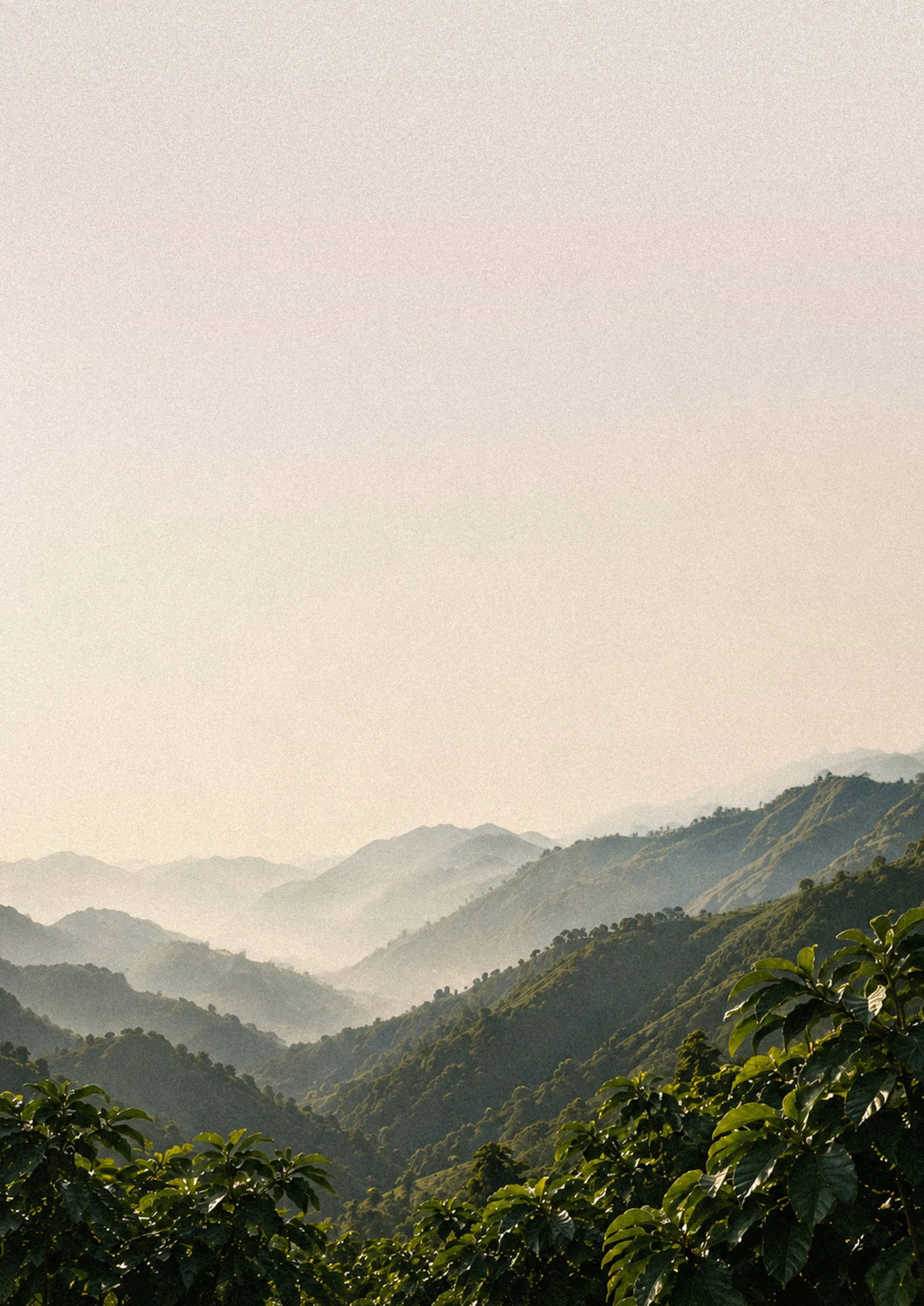
Say “Chinese coffee” and almost everyone thinks of Yunnan. This province in south-western China is now the heart of the country’s production. Yet its coffee story begins neither with the large modern plantations nor with the recent rise of specialty coffee. It goes back to the end of the nineteenth century.
A story that begins in the mountains
In 1892, French missionaries arriving from Vietnam are said to have introduced coffee plants to the Binchuan area, near Dali. The first trees were planted in the village of Zhukula, deep in a mountain valley that was hard to reach. Coffee found a favourable home there: a mild climate, high altitudes, fertile soils and a wide gap between day and night temperatures.
That first planting did not turn Yunnan into a producing region overnight. Coffee remained a local crop for a long time, almost confidential, grown around the missions and in a handful of villages. But those first plants marked the beginning of a singular story: a coffee that would gradually adapt to a Chinese territory, to its landscapes and its rural communities.
Zhukula is still often described as one of the historic cradles of Chinese coffee. The village keeps old coffee trees and the memory of that French introduction. Some sources report that several trees more than a hundred years old are still standing there.
From modest beginnings to organised cultivation
For several decades, coffee remained a minor crop in Yunnan’s agriculture. The province was known above all for its tea, rice, sugar cane, fruit and medicinal plants. Coffee grew in that environment without a proper supply chain.
A new stage opened at the start of the twentieth century. In 1914, Arabica was introduced to Dehong prefecture, in the west of the province, from neighbouring Burma. That planting widened coffee’s presence across Yunnan.
Plantations remained limited, but the natural conditions were remarkable. Lying between the Tropic of Cancer and the fifteenth parallel north, Yunnan enjoys a latitude well suited to Arabica. Its relief creates a great diversity of microclimates, while altitude slows the cherries’ ripening.
That slowing matters. When fruit ripens more slowly, it develops more sugars, more acidity and more aromatics. The outcome depends of course on the variety, the processing and the grower’s skill — but the land offers a promising natural base.
The 1950s: coffee becomes an industry
Real development began in the 1950s. Cultivation was organised and encouraged on a larger scale, largely to meet domestic demand. Plantations appeared around Baoshan, Pu’er and Dehong.
In Baoshan, the modern history of coffee is often linked to Liang Jinshan, who is said to have introduced plants from South-East Asia in the mid-1950s. That period saw more structured plantations and genuine local expertise emerge.
Through the 1950s and 1960s, Yunnan and Hainan province significantly expanded their production. Coffee became a planned crop, with its plantations, research centres and processing facilities.
Those years brought new stability — but also an essentially quantitative outlook. The aim was a consistent coffee, available in volume, suited to the domestic market. Cup quality and varietal diversity were not yet priorities.
The rise of Pu’er
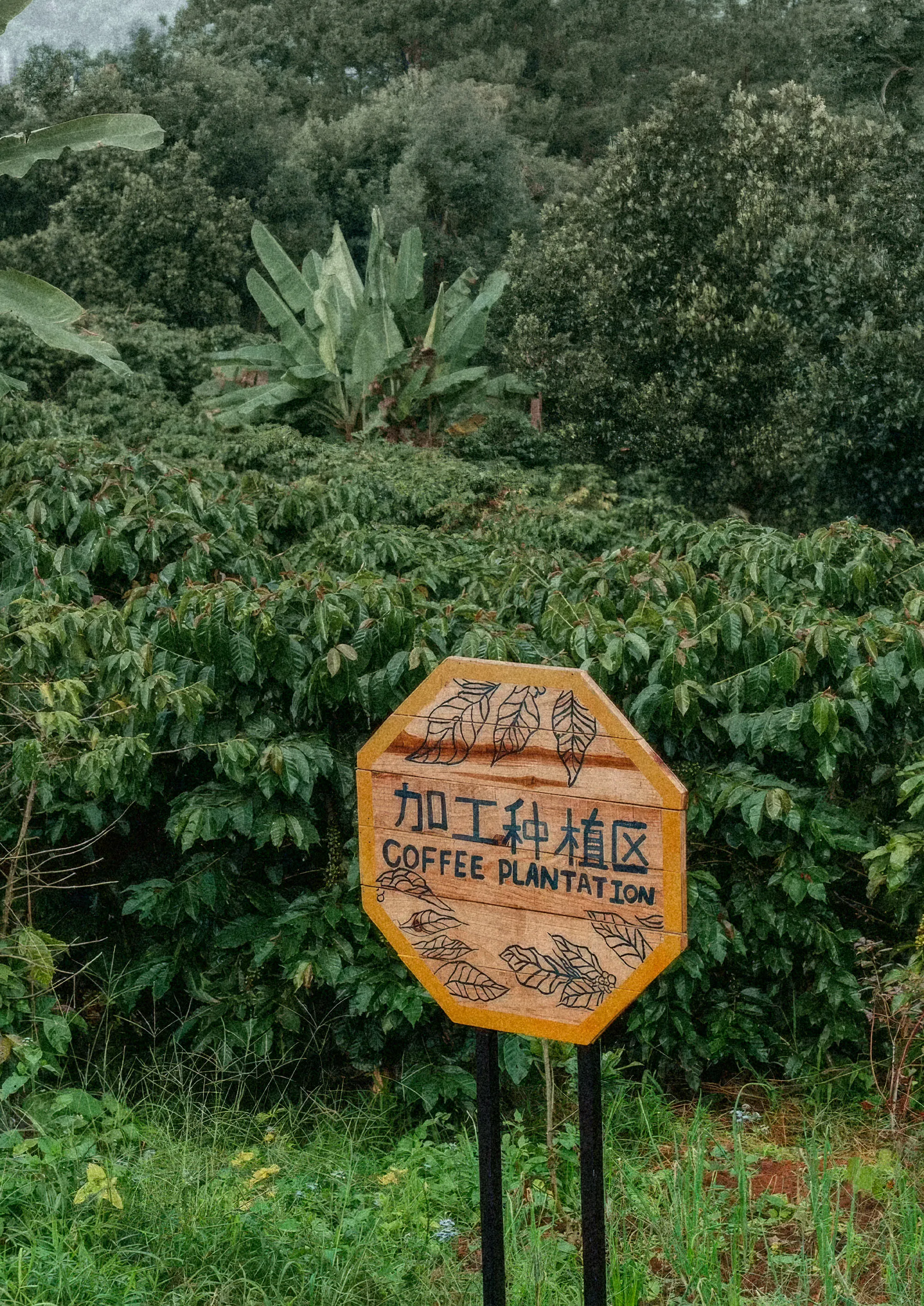
From the 1980s onwards, coffee entered a new growth phase. The city of Pu’er gradually became the main centre of production and trade for Chinese coffee. The region has vast mountain areas, a subtropical climate and altitudes generally between 900 and 1,700 metres depending on the plot.
Pu’er is now regarded as China’s coffee capital. It concentrates much of the national production, along with the infrastructure for collection, drying, processing, roasting and trade.
The most widely grown variety there is Catimor. This group of cultivars is valued for its yield, its resistance to coffee leaf rust and its adaptability. It is often associated with round, sweet, structured coffees, with notes of cocoa, nuts or caramel when harvest and processing are well handled.
For a long time, this dominance gave Yunnan coffee a fairly uniform image. But that image tells only part of the story.
From volume to specialty coffee
From the 2000s, and more clearly around 2009, some growers and washing stations turned towards the specialty market. They trialled new varieties, improved cherry selection and experimented with different processing methods.
Washed coffee, long dominant, was joined by honey, natural and fermented lots. Growers invested in sorting, drying and fermentation control. Lots were separated by plot, by variety, by harvest date. Coffee stopped being a mere agricultural commodity: it became a product of origin, with an identity and a story.
Cupping labs appeared in Pu’er and Baoshan. Growers could finally assess the result of their work precisely, compare lots and adjust their practices.
This shift is decisive. Specialty coffee does not depend on a region or a variety: it rests on a complete chain — cherry ripeness, harvest, sorting, fermentation, drying, storage, roasting, brewing. Yunnan now holds several of those links.
A diversity still little known
Yunnan is not a single terroir. The province spans a vast, mountainous territory with several growing areas: Pu’er, Baoshan, Dehong, Lincang, Xishuangbanna, Dali. Each has its own growing conditions.
In Baoshan, coffees can show brighter acidity, an elegant texture, floral or fruity notes, especially at altitude. Pu’er often yields balanced, sweet coffees with cocoa, citrus or ripe fruit profiles. Dehong, warmer and close to the Burmese border, is associated with rounder, fuller, less acidic coffees.
This diversity is reinforced by new varieties. Alongside Catimor you will find Typica, Yellow Bourbon, Pacamara and other experimental selections. Some plantations also keep old coffee trees, descended from the first introductions or from local populations adapted to the land.
Yunnan is becoming a testing ground. Growers are less interested in reproducing a model than in understanding what their environment can express.
A new generation of growers
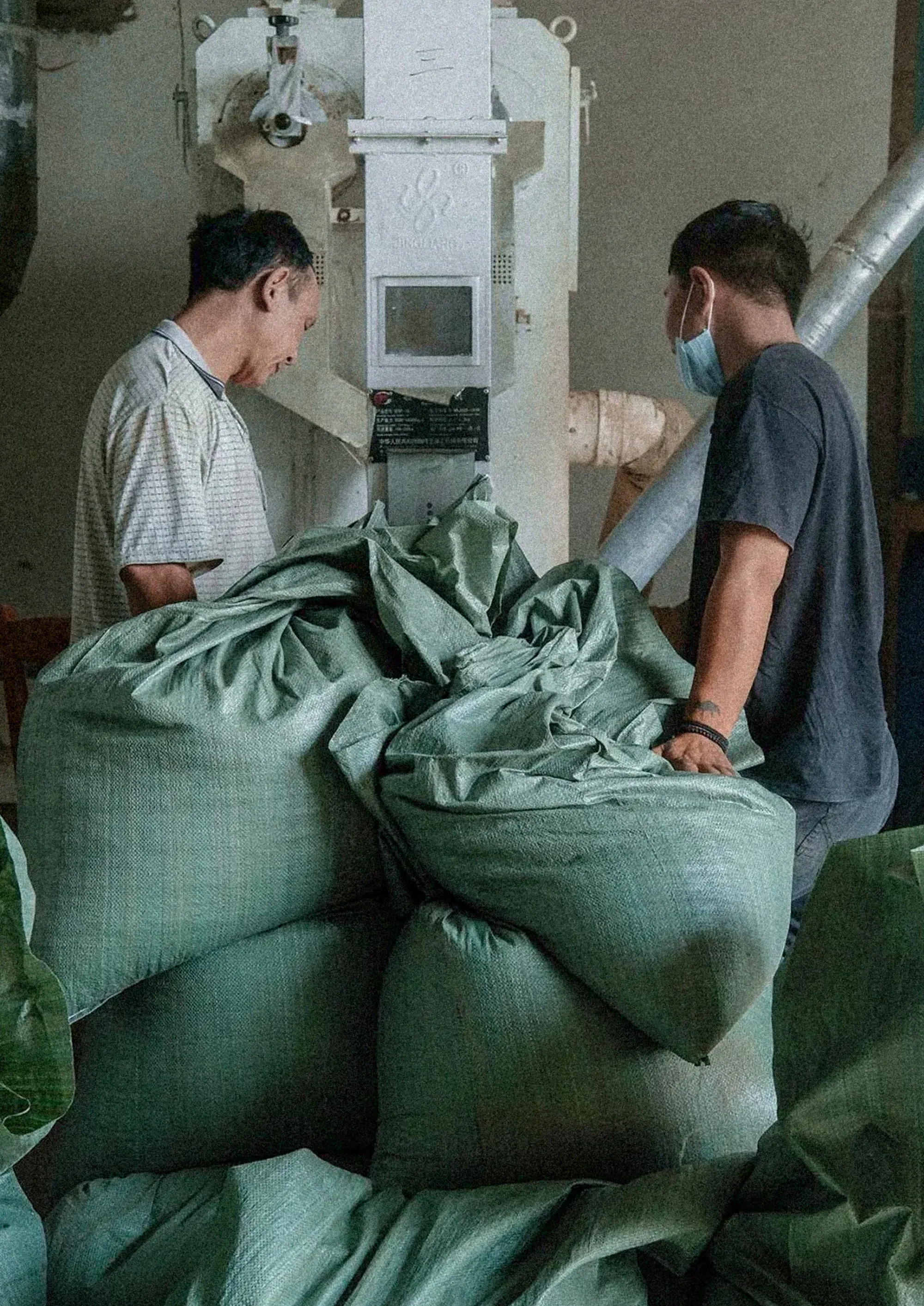
The recent shift rests largely on a new generation of growers, washing stations and traders. Some work with agronomists and international roasters. Others develop their own fermentation methods or invest in optical sorting.
This does not mean every Yunnan coffee is a specialty coffee. As everywhere, quality varies by lot, by harvest and by method. But the province now has the tools to produce precise, complex, distinctive coffees.
In 2023, Yunnan accounted for more than 98% of Chinese coffee production, with around 82,700 hectares under cultivation and a reported output of 107,500 tonnes. That same year, specialty coffee represented roughly 23% of regional production according to figures relayed by the Chinese cultural press.
Those numbers speak to the scale of the industry — and to the road still ahead. Specialty coffee remains a minority share, and a growing one.
From Chinese coffee to Yunnan coffee
Yunnan coffee is interesting because it escapes easy categories. It is not simply Chinese coffee, nor simply Asian coffee. It comes from a particular history, shaped by exchanges between China, Vietnam, Burma and the wider world.
Its story begins with a few plants brought into a valley in 1892. It continues with the plantations of Baoshan, the rise of Pu’er, the agricultural programmes of the twentieth century and the recent arrival of specialty methods.
Today, Yunnan’s growers are building an identity of their own. They work with different varieties, innovative fermentations and terroirs still little known outside China.
It is this combination of heritage and experiment that makes Yunnan coffee so compelling. Behind every cup lies a story more than a hundred and thirty years old — and a region still searching for its own voice.
Read more
- Pu’er, Baoshan, Dehong: three terroirs of Yunnan coffee
- Catimor, Yellow Bourbon, Pacamara: three Yunnan varieties
- Our Yunnan coffees
