
Catimor, Yellow Bourbon, Pacamara: three Yunnan varieties
Catimor, Yellow Bourbon and Pacamara: discover the differences between three varieties grown in Yunnan and how they shape the taste of coffee.
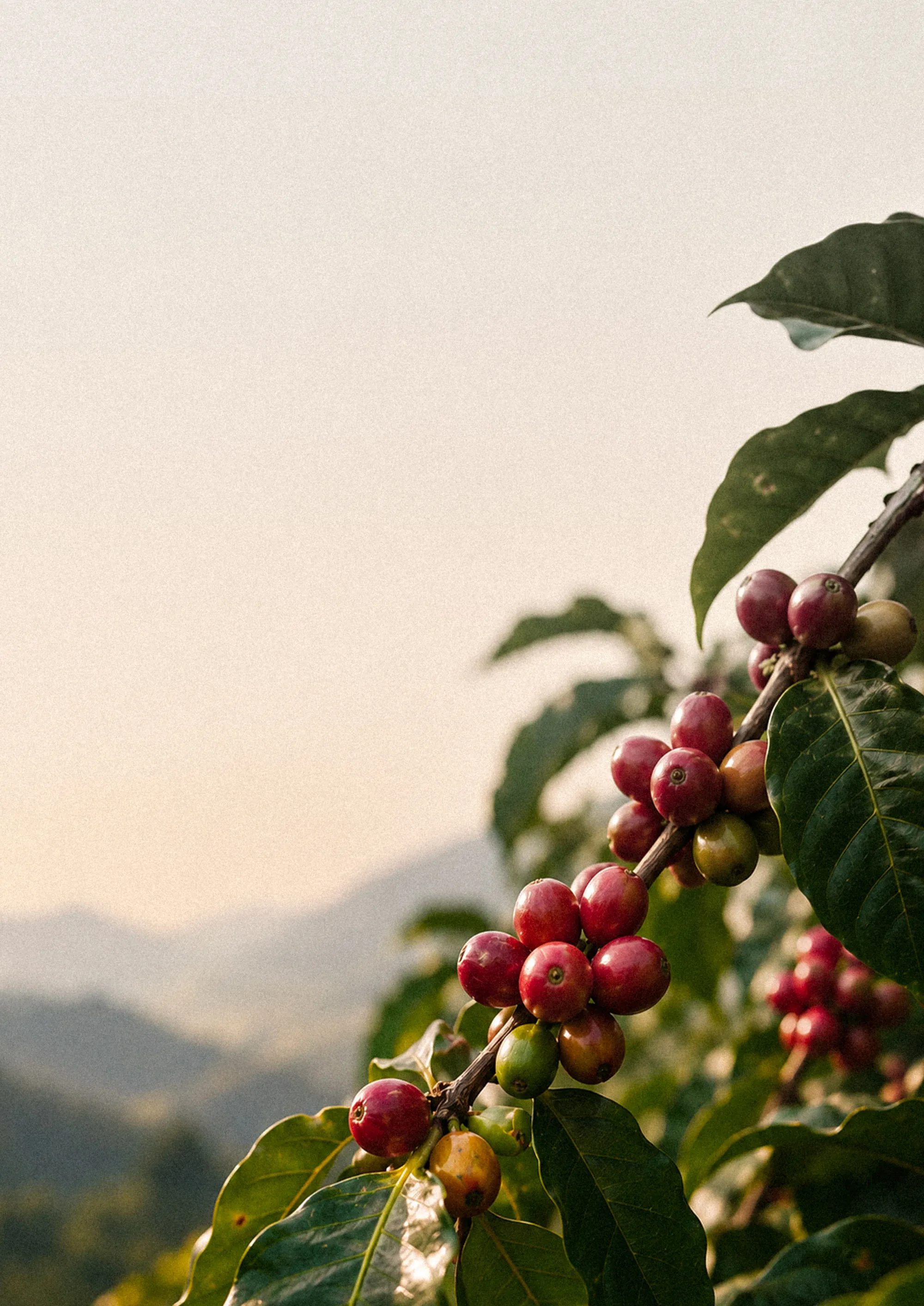
When tasting a coffee, we usually think about its origin, its altitude or its processing. Yet the variety of the coffee tree plays an essential role too: it shapes the plant’s habit, its yield, its disease resistance, how fast it ripens and the aromatic potential in the cup. It does not decide everything, but it sets a direction.
Why talk about varieties?
In Yunnan, three names come up more and more often: Catimor, Yellow Bourbon and Pacamara. They represent three very different approaches to growing coffee.
Catimor is widely grown for its productivity and resilience. Yellow Bourbon is sought after for its sweetness and aromatic potential. Pacamara draws attention with its very large beans and exceptional quality potential.
Comparing them is a good way to understand the diversity of Yunnan coffee.
Catimor: the backbone variety
Catimor is not a single variety but a group of cultivars bred from crosses between Caturra lines and plants related to the Timor Hybrid. It generally combines good productivity, a compact habit and heightened resistance to coffee leaf rust.
That combination explains its strong presence in Yunnan. In a region where growers must cope with disease, climate variability and the need for steady yields, Catimor is a practical choice. World Coffee Research notes that some Catimors offer very high yields, rust resistance and good quality potential when grown above 1,300 metres.
Catimor sometimes has a poor reputation among specialty drinkers, associated with simple, unsweet, standardised coffees. That view is too narrow. A Catimor’s quality depends above all on cherry selection, altitude, the yield asked of the plant and post-harvest processing.
A Catimor picked too early and dried too fast gives a vegetal, dry, unexpressive cup. But a ripe lot, carefully sorted and properly fermented, can be excellent: round body, notes of cocoa, caramel, yellow fruit or soft citrus.
In Yunnan, Catimor gives balanced, approachable, structured coffees. It works as well in filter as in espresso, and its natural body is valuable in a blend.
In the cup
- Cocoa and milk chocolate
- Notes of nuts and caramel
- Moderate acidity, sometimes citrus-leaning
- Round body
- A soft, fairly long finish
Catimor is the variety of consistency. It can produce very good coffees, but it demands precise harvesting and processing to show its full potential.
Yellow Bourbon: sweetness and finesse
Bourbon is one of the most important Arabica varieties historically and genetically. It is renowned for its quality potential, particularly at high altitude — and it is more disease-prone and less productive than modern resistant varieties.
Yellow Bourbon is a selection marked by the yellow colour of its cherries at maturity. That colour does not guarantee a sweeter or fruitier coffee, but it is often associated with an elegant, sweet profile.
The variety demands more attention: more fragile trees, lower yields, a more exacting harvest. When conditions align, cup quality can be remarkable.
In Yunnan, Yellow Bourbon plantings remain more limited than Catimor. That scarcity, combined with the difficulty of growing it, makes it a sought-after variety for specialty lots.
In the cup
- A sweetness suggesting honey or brown sugar
- Yellow fruit — apricot, peach
- Soft citrus
- A silky texture
- Clear but balanced acidity
- Floral notes, depending on altitude and processing
Processing strongly shapes its expression. Washed, Yellow Bourbon is precise and luminous. In honey, it gains texture and sweetness. As a natural, it develops ripe fruit notes and a jammier sensation.
Let us avoid automatic promises, though: the name “Yellow Bourbon” alone guarantees nothing. A poor harvest remains a poor harvest.
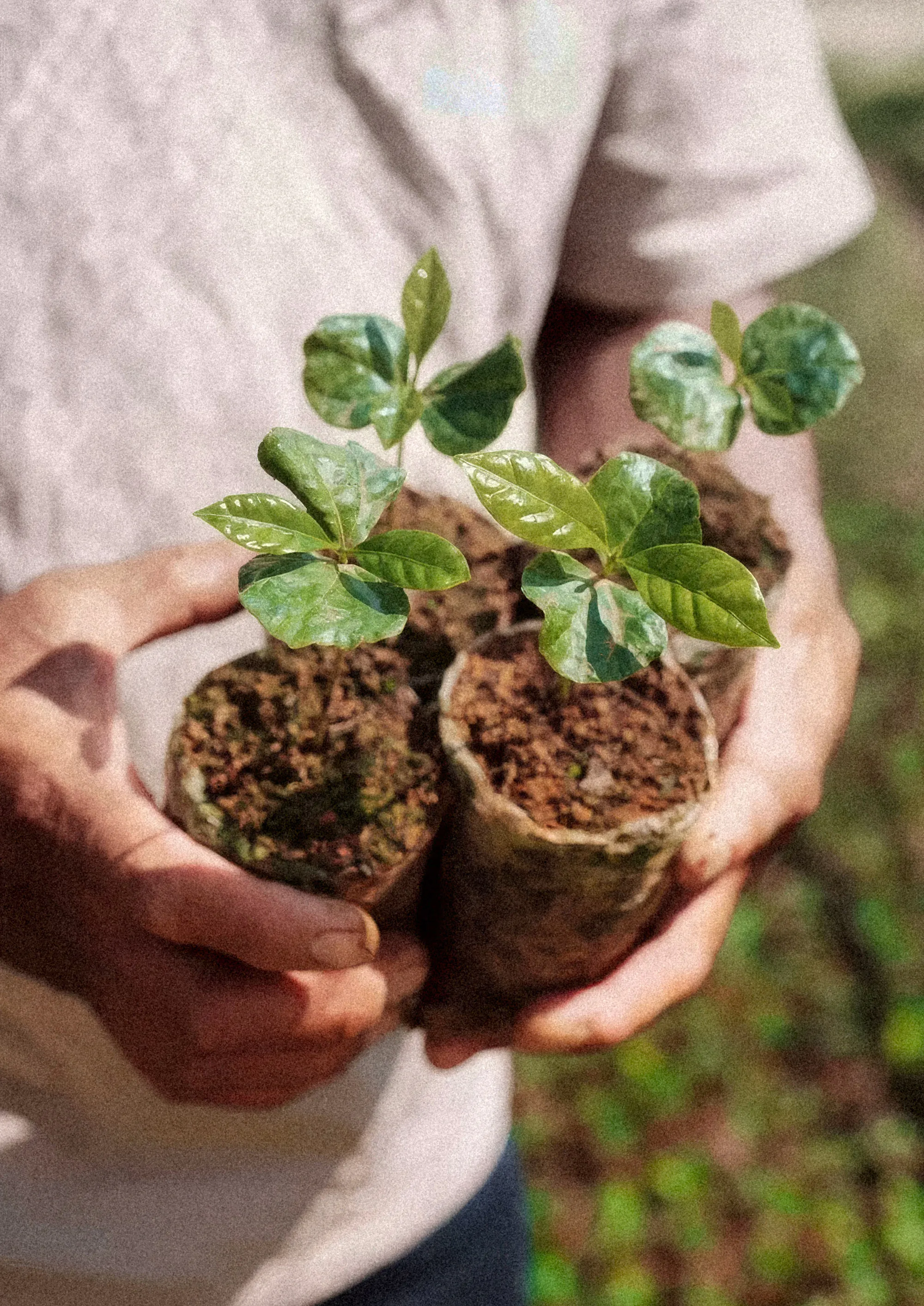
Pacamara: the large-format experiment
Pacamara is a variety created in El Salvador, a cross between Pacas — a compact mutation of Bourbon — and Maragogipe, known for its very large beans. The result is a strikingly large plant and bean, immediately recognisable.
World Coffee Research describes Pacamara as capable of exceptional cup quality. On the other hand, the variety is highly susceptible to leaf rust, shows low genetic uniformity and can produce different plants from one generation to the next.
It is therefore a demanding variety: high aromatic potential, but one that requires good agricultural conditions, careful selection and a well-managed harvest.
In Yunnan, growing it remains recent and experimental. Some growers and washing stations plant it on small plots to observe how it adapts to the local climate, often alongside Yellow Bourbon and Catimor.
In the cup
- Bright, complex acidity
- Floral notes
- Tropical or red fruit
- An ample texture
- Great length on the palate
- Profiles that are sometimes spicy, herbaceous or chocolatey
The variety can be very expressive without always being easy to read. Some Pacamaras are elegant and floral, others more savoury, spicy, even slightly vegetal. Terroir, ripeness and processing are decisive.
Pacamara reveals itself above all in filter, when roasting and extraction preserve its aromatics. Too dark a roast masks part of its complexity.
Three varieties, three agricultural strategies
| Variety | Main agronomic appeal | Susceptibility | Cup potential | Frequent expression |
|---|---|---|---|---|
| Catimor | Yield and rust resistance | Generally more robust | Good to very good depending on altitude and processing | Cocoa, caramel, nuts, soft fruit |
| Yellow Bourbon | Quality, sweetness and finesse | More fragile, disease-prone | High at altitude | Honey, yellow fruit, citrus, flowers |
| Pacamara | Aromatic potential and large bean size | Highly rust-susceptible, low uniformity | Exceptional in the right conditions | Fruit, flowers, spice, ample texture |
Variety is therefore also a question of trade-offs. Catimor makes production easier and offers great consistency. Yellow Bourbon demands more care but can give a particularly elegant cup. Pacamara offers spectacular potential while being riskier and less predictable.
Variety is never enough
It would be tempting to rank varieties from the simplest to the noblest. That would be a mistake.
Catimor is not inferior by definition: it can produce a remarkable cup on a well-run farm. Yellow Bourbon is not always more aromatic. Pacamara can be exceptional, but also hard to balance.
The final taste depends on a complete chain: the plant’s genetics, the terroir and altitude, ripeness at harvest, cherry selection, fermentation, drying, storage, roasting and brewing.
A washed Catimor, picked fully ripe on a high plot, can give a very clean, sweet coffee. A badly dried Pacamara loses its precision and develops defects. A Yellow Bourbon picked too early will lack sweetness.
Variety indicates a potential. The grower’s work reveals it.
How to taste all three
To compare Catimor, Yellow Bourbon and Pacamara, brew them under identical conditions. A filter method lets the differences come through clearly:
- 15 grams of coffee
- 250 grams of water
- a temperature of 92 to 94 °C
- a medium grind
- a brew of about 3 minutes
Start with the dry fragrance. Yellow Bourbon already suggests honey or yellow fruit; Pacamara shows more pronounced floral or fruity notes; Catimor seems more chocolatey, more cereal-like.
After brewing, wait a few minutes. The cup evolves as it cools: acidity and fruit often become easier to read once the coffee is no longer scalding.
Observe the body. Catimor will feel rounder, Yellow Bourbon silkier, Pacamara more ample, sometimes almost creamy.
Finally, compare the length. A quality coffee is not defined by one precise aromatic note: it must stay balanced and pleasant after the sip.
Three faces of Yunnan coffee
Catimor stands for adaptation and the building of an industry. It lets many growers cultivate coffee under safer, steadier conditions.
Yellow Bourbon is a reminder of the importance of old varieties and patient work. It is harder to grow, but it yields sweet, precise, elegant coffees.
Pacamara embodies experiment. It opens the door to more complex, more spectacular profiles, while demanding more research and attention.
In Yunnan, these three varieties are not just names on a tasting sheet. They speak of a region working to understand its terroirs better, to diversify its coffees and to build a specialty identity.
The future of Yunnan coffee will probably not rest on a single variety. It will be drawn instead from the coexistence of resistant trees, historic varieties and bolder trials.
That diversity is what makes each harvest interesting: behind one territory can hide very different coffees, and each variety offers a new way of discovering Yunnan.
Read more
- Yunnan coffee: a story that began in 1892
- Pu’er, Baoshan, Dehong: three terroirs of Yunnan coffee
- Our Yunnan coffees
